

With dozens of AI-powered education tools on the market, it can be tough to figure out which ones actually improve your math skills.
That’s why I tested the most popular math AI apps to find out which ones are actually useful — not just for solving problems, but for learning.
Whether you’re stuck on a homework question, prepping for finals, or trying to help your kid with fractions, this guide breaks down the five best math AI apps of 2025.
Quick Comparison Table
| App | Rating | Starting Price | Best For | Platforms | Free Plan |
|---|---|---|---|---|---|
| Socratic | 4.8 | Free | Concept breakdowns | iOS, Android | Yes |
| Photomath | 4.7 | Free or 9.99/month | Instant solving | iOS, Android | Yes |
| ChatGPT | 4.6 | Free or 20/month | Conversational tutoring | Web, iOS, Android | Yes |
| Cuemath | 4.3 | 21/month | Personalized learning | Web | No |
| Prodigy | 4.2 | Free or 9.95/month | Gamified learning for kids | iOS, Android, Web | Yes |
1. Socratic: Best for Concept Breakdown
Starting Price: Free
Available On: iOS, Android
AI Features: Equation scanning, concept explanations, video and article references
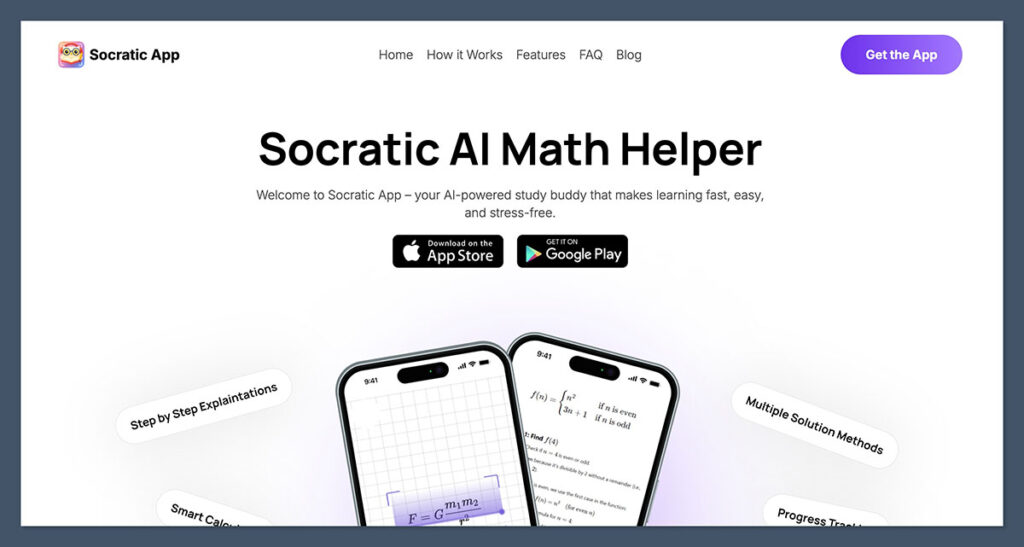
Socratic helps students learn the core ideas behind math problems.
You take a photo of a question, and instead of just solving it, Socratic explains the concepts involved, provides visuals, and links to helpful videos and examples.
Built specifically to enhance student understanding, it’s more than just a problem solver — it’s a full learning companion.
It covers topics like algebra, geometry, and pre-calculus, and connects students to helpful learning materials curated from around the web.
The interface is clean and designed for ease of use, making it a strong pick for beginners and casual learners.
Pros
- Completely free to use
- Strong focus on learning and comprehension
- Useful for students at beginner and intermediate levels
Cons
- Doesn’t walk through every solving step
- Lacks advanced math coverage
Best for: Socratic is best for students who want to understand concepts rather than just get answers.
It’s also a good fit for parents helping their kids with homework but unsure of how to explain it themselves.
2. Photomath: Best for Instant Problem Solving
Starting Price: Free or 9.99$/month
Available On: iOS, Android
AI Features: Camera-based solving, step-by-step explanations, graph generation
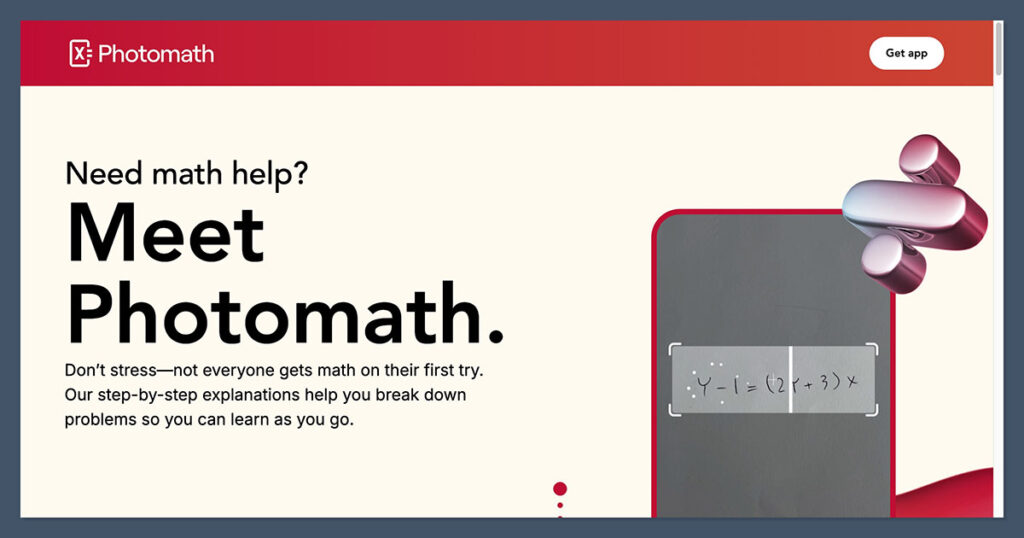
Photomath is the most popular math-solving app for good reason.
It lets you snap a photo of a math problem, then shows you exactly how to solve it step-by-step.
Whether it’s basic algebra or complex calculus, Photomath breaks down the process clearly.
It doesn’t just give answers. It explains each step so you understand how the solution works.
This makes it ideal for both students and parents trying to help at home.
Pros
- Accurate camera scanning for printed and handwritten problems
- Detailed steps and solution breakdowns
- Supports a wide range of topics from arithmetic to calculus
Cons
- You need to upgrade to see advanced solving steps
- Less focus on concept learning or tutoring
Best for: Photomath is great for students who want to speed up homework without skipping the learning process. It’s a reliable tool for checking your work and filling in the blanks.
3. ChatGPT: Best for Conversational Tutoring
Starting Price: Free or 20$/month
Available On: Web, iOS, Android
AI Features: Contextual tutoring, detailed explanations, follow-up questions, LaTeX support
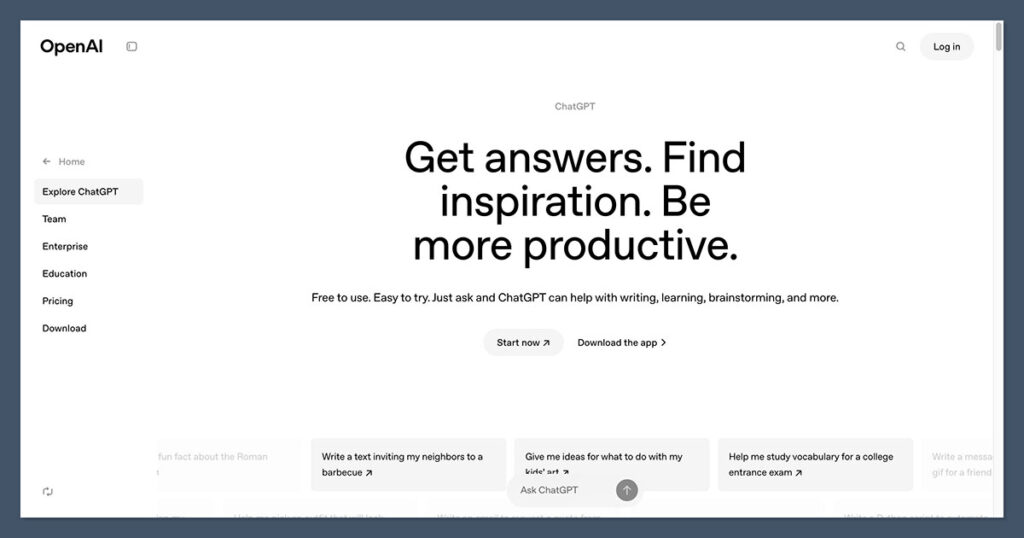
ChatGPT might not be a dedicated math app, but it’s surprisingly powerful for math help.
When you type in a problem or concept, it gives you detailed explanations — and even lets you ask follow-up questions in natural language.
This makes it feel like you’re chatting with a personal tutor.
I’ve used it to break down calculus, probability, and number theory, and the AI handled every question with flexibility.
Pros
- Explains math concepts in everyday language
- Great for follow-up questions and alternate methods
- Useful for high school and college-level math
Cons
- No built-in camera or equation scanner
- Free version can struggle with complex or symbolic math
Best for: ChatGPT is ideal for learners who want to ask why something works — not just how to solve it.
If you’re self-studying or reviewing for exams, this is a great second brain to have on hand.
4. Cuemath: Best for Personalized Learning
Starting Price: 21$/month
Available On: Web
AI Features: Personalized learning paths, real-time progress tracking, tutor integration
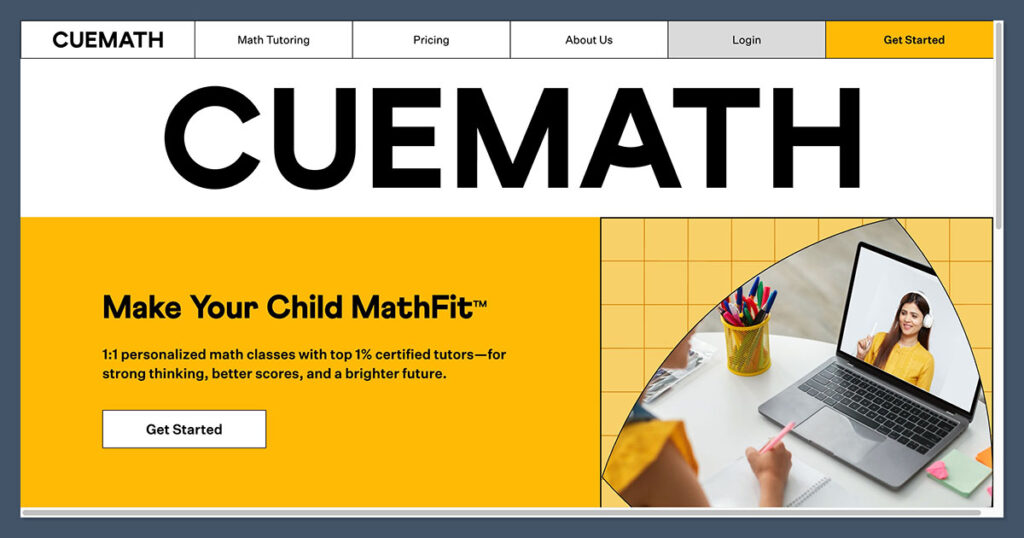
Cuemath is a structured learning platform that blends AI with real tutors. It’s more of a curriculum-based program than a math helper.
The AI tailors lessons to the user’s ability level and learning pace, adjusting as you improve.
For families looking for long-term improvement and test preparation, Cuemath is one of the most complete math education apps available.
Pros
- Structured, curriculum-aligned lessons
- Progress tracking and personalized plans
- Optional live tutoring for deeper support
Cons
- No free version
- Less convenient for on-the-go problem solving
Best for: Cuemath works well for students who need structure, not just homework help.
It’s especially useful for parents looking for a long-term solution that tracks learning and provides measurable progress.
5. Prodigy: Best for Gamified Learning
Starting Price: Free or 9.95$/month
Available On: iOS, Android, Web
AI Features: Adaptive questions, personalized learning pace, educational game integration
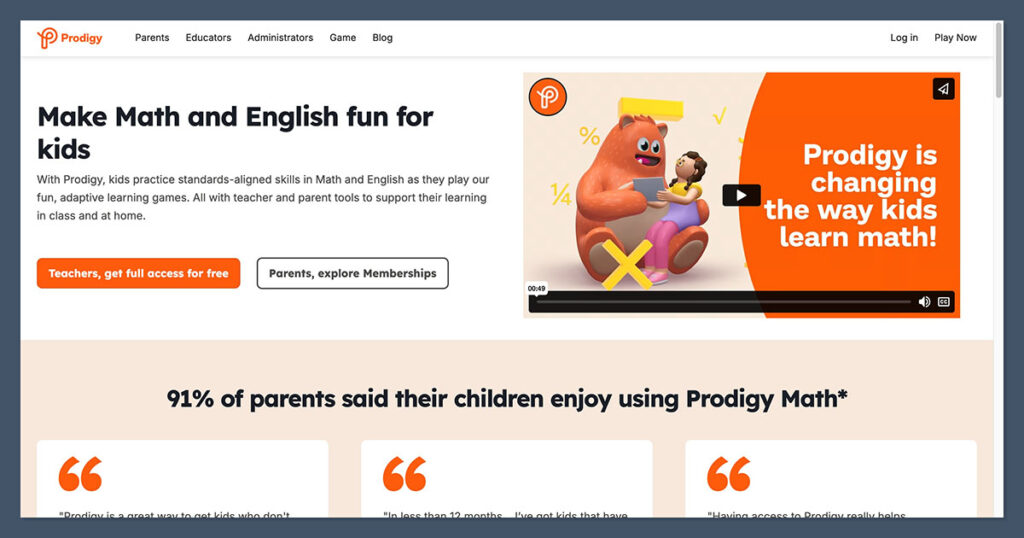
Prodigy combines math questions with a fantasy role-playing game where students battle characters and earn rewards by solving math problems.
The AI adjusts question difficulty based on performance.
This style keeps younger students engaged while ensuring they practice important skills.
Prodigy covers grades 1 to 8 and aligns with common US and Canadian curriculums.
Pros
- Highly engaging for kids through interactive gameplay
- Parents and teachers can assign tasks and track progress
- Supports curriculum-aligned learning
Cons
- Premium membership required for full access
- Less effective for older students or high-level math
Best for: Prodigy is best for kids who need motivation to practice math regularly. It’s a fun way to build foundational skills without constant reminders.
Methodology: How I Tested These Apps
I tested each app on both iOS and Android devices, using them to solve real math problems across different topics — from simple fractions to calculus.
Each app was scored on:
| Category | Weight |
|---|---|
| Solving Accuracy | 30 percent |
| Explanation Quality | 25 percent |
| Ease of Use | 20 percent |
| Value for Money | 15 percent |
| Learning Personalization | 10 percent |
Apps were used daily for two weeks and tested on students ranging from elementary school to college level.
In addition to testing for speed and clarity, I also looked at how each app handles real-world challenges — such as word problems, ambiguous input, and student mistakes.
Some apps were more forgiving or better at guiding the user back on track, which added extra value in a learning context.
I also factored in whether the app had distractions, upsells, or required premium upgrades to be useful.
Final Verdict: Which Math AI App Should You Use?
Every app on this list is strong in its own way, depending on your goals and learning style.
| Best For | App |
|---|---|
| Fast, accurate solving | Photomath |
| Explaining concepts conversationally | ChatGPT |
| Learning with visual guides | Socratic |
| Structured, curriculum-based learning | Cuemath |
| Keeping kids motivated with games | Prodigy |
For most students, I recommend starting with Photomath for solving and Socratic for learning.
If you’re in college or need more advanced help, ChatGPT becomes more valuable.
If you’re a parent looking for a more structured and trackable tool, Cuemath is a better fit.
And for younger students, Prodigy is a great entry point.
That said, the best approach is often to combine two or more apps. Use one for quick help and another for deeper understanding.
Since most of these tools offer a free version or trial, try a few before committing to a paid plan. It’s less about the tool itself — and more about how it fits your workflow and helps you learn more effectively.
